11 hr
Big Island Volcanoes, Waterfalls & Coffee Farm Adventure
- Expert local guide
- Small group
- Skip-the-line access
- Free cancellation
Kilauea Tours from Kona — Volcano Park Adventures
Cross the island to earth's most active crater, where lava shapes the land in real time.
Compare fares, pick the fit — all bookings are mobile-voucher and eligible for free cancellation where shown.
11 hr
12 hr
7 hr
| Experience | Duration | Rating | Pickup | Lunch | Skip-the-line | Guide | Price | |
|---|---|---|---|---|---|---|---|---|
|
Guided Experience
Most popular
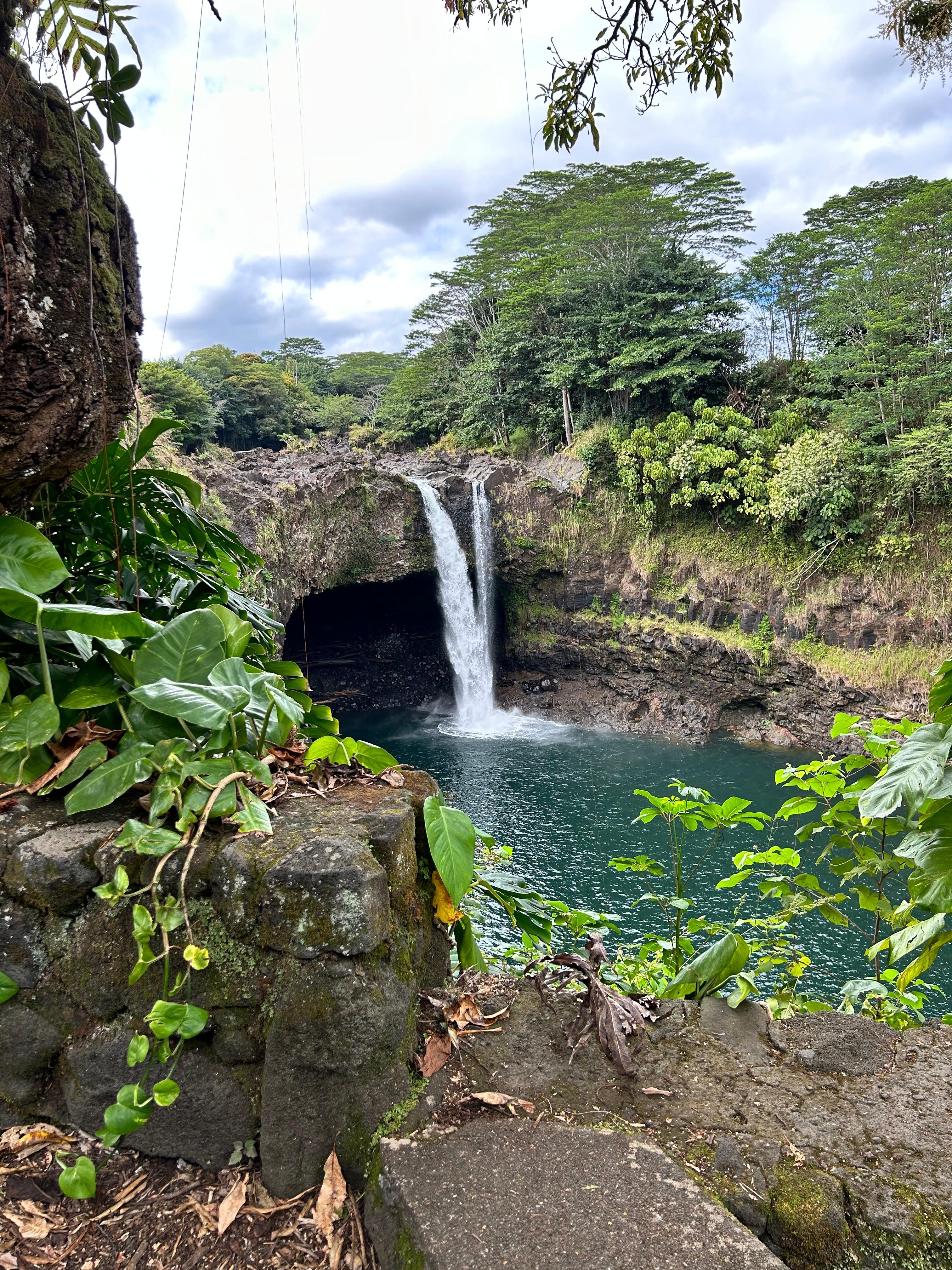
Big Island Volcanoes, Waterfalls & Coffee Farm Adventure
|
11 hr | ★ 4.9 | ✓ | ✓ | ✓ | ✓ | €242 | Book → |
|
Guided Experience
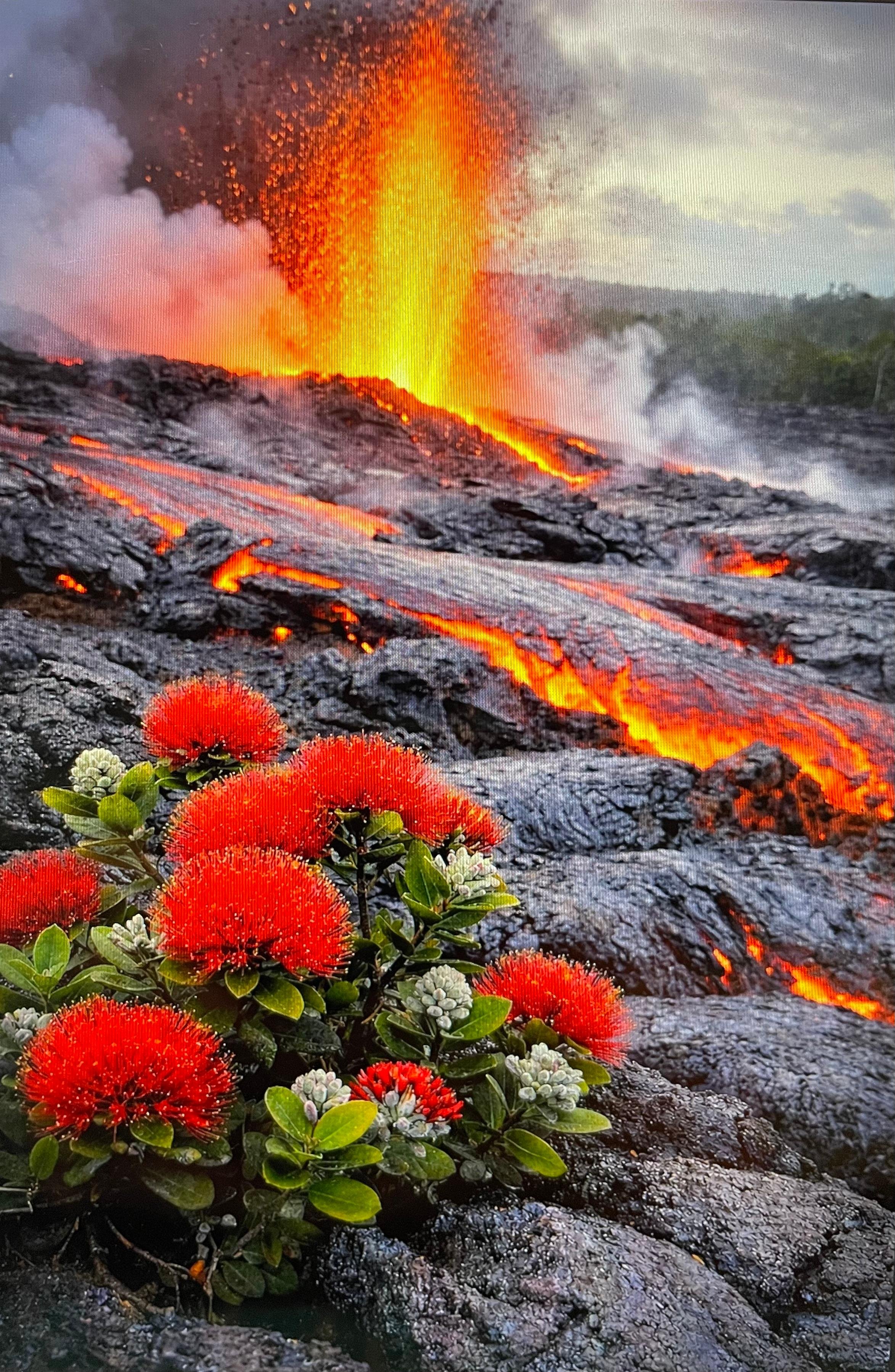
Big Island Volcano & Stargazing Experience
|
12 hr | ★ 4.8 | ✓ | ✓ | ✓ | ✓ | €271 | Book → |
|
Guided Experience
Hawaii Volcanoes National Park and Hilo Discovery Tour
|
7 hr | ★ 5.0 | ✓ | ✓ | ✓ | ✓ | €149 | Book → |
Worth it if you value guided expertise
Kilauea tours from Kona solve the biggest logistical hurdle: the two-and-a-half-hour drive each way across the island. Organized tours bundle transport, narration, and park admission (the standard entrance pass costs 30 USD per vehicle), often adding stops at waterfalls, coffee farms, or black sand beaches along the route. The trade-off is clear—tours cost more than self-driving but remove navigation stress and deliver context most visitors miss on their own. If you want a geologist or cultural guide explaining lava tubes, crater formation, and Hawaiian volcano traditions, the premium pays off. Independent travelers comfortable with long drives and content exploring at their own pace will find better value renting a car and using the park entrance fee alone. For first-timers prioritizing convenience and interpretation over flexibility, volcano tours from Kona justify the cost. Families and solo travelers without rental vehicles gain the most.
Bottom line: Book a Kilauea tour from Kona if you value guided interpretation and hassle-free logistics over the flexibility of a self-driven visit.
They complement each other; most visitors who do both call the volcanic landscape of Hawaii Volcanoes National Park a more interactive geothermal experience, while the Mauna Kea stargazing tour provides a more profound, celestial encounter.
|
Top pick Kilauea Tours |
Mauna Kea Summit Tours | |
|---|---|---|
| Focus | Geology and active craters | |
| Altitude | Low to moderate elevation | |
| Weather | Variable rain and heat | |
| Activities | Hiking and caldera viewing | |
| Typical Duration | Full-day excursion | |
| Best Arrival | 06:00–09:00 | |
| Entry Price | 30 USD (per private vehicle) | |
| Who it suits | Nature and science enthusiasts | |
| See tickets & prices |
Verdict: Choose a kilauea tours from kona tour if you prioritize hiking and geological discovery, or opt for a Mauna Kea summit experience if you prefer high-altitude stargazing and sunset views.
Hand-picked experiences loved by thousands of travelers
6 hours
Free Cancellation
Explore volcanic landscapes, dramatic coastlines, and lush Hawaiian gardens on this full-day Big Island experience
5 hours
Free Cancellation
Journey from Hilo's historic landmarks to Kilauea's active volcanic landscapes on this immersive Big Island adventure
7 hours
Free Cancellation
Explore Kilauea volcano, lush rainforest roads, Hilo's markets and a stunning tri-color sand beach.
3 hours
Free Cancellation
Trek through native rainforest and across ancient lava formations in Hawaii's volcanic wonderland
7 hours
Free Cancellation
Explore Hawaii's volcanic wonders, cascading waterfalls, and black sand shores on this full-day island journey
6 hours 30 minutes
Free Cancellation
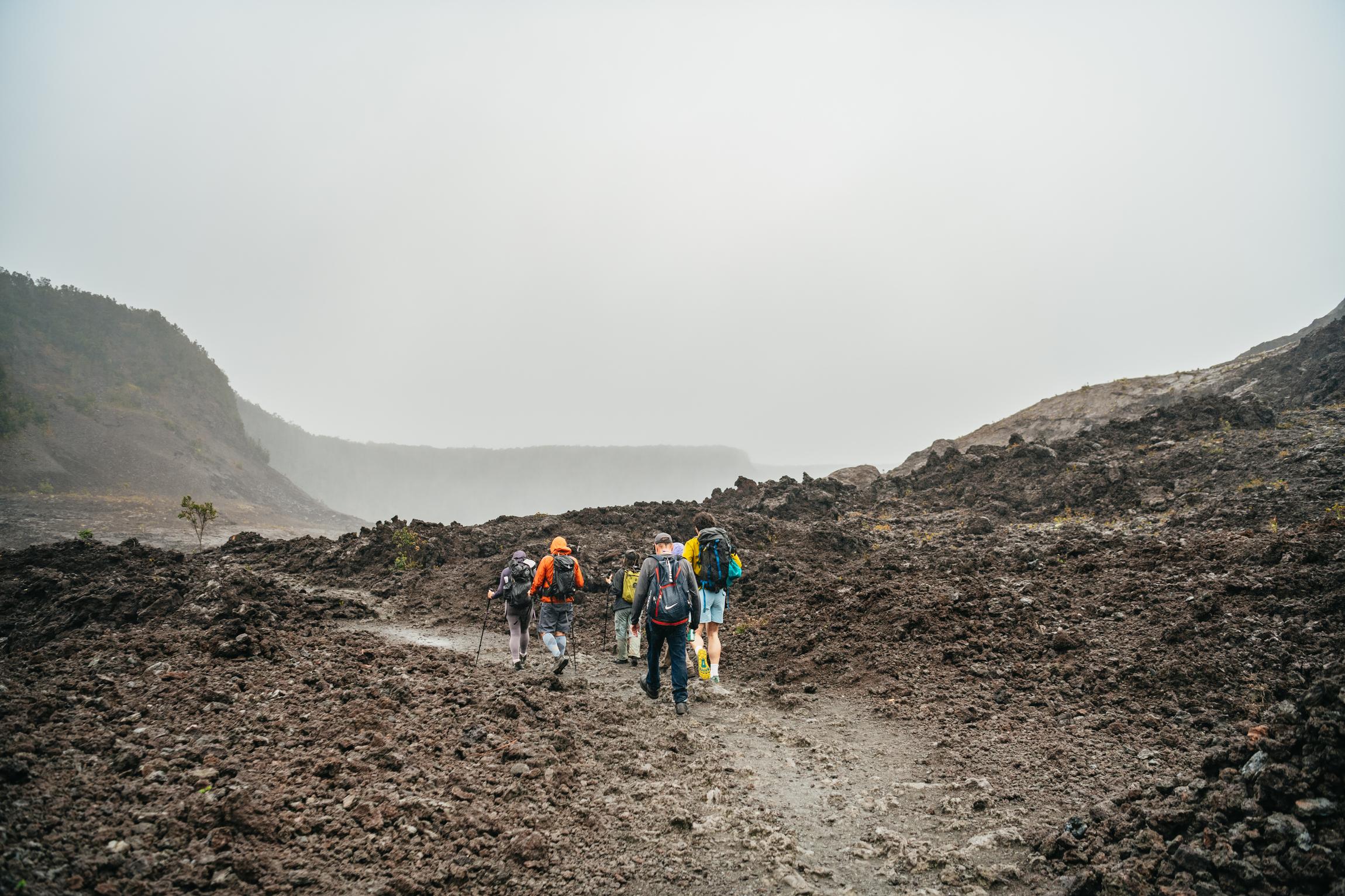
Explore volcanic craters, lava tubes, and rainforests on this full-day guided hiking adventure
12 hours
Free Cancellation
Discover Hawaii's volcanic landscapes, black sand shores, and cultural treasures on this full-day island adventure
8 hours
Free Cancellation
Full-day customizable journey through volcanic landscapes, black sand shores, and coffee country
Check-in and orientation at the park entrance
Explore exhibits on volcanic history
Driving tour with scenic overlook stops
Guided treks through hardened lava fields
You leave Kona's coast in darkness, climbing through coffee country as the first light touches Mauna Kea's summit. The Saddle Road cuts between the two massive shield volcanoes, passing military training ranges and lava fields that look lunar under the rising sun.
By the time you reach the park entrance at Crater Rim Drive, wisps of steam are already rising from vents along the caldera edge.
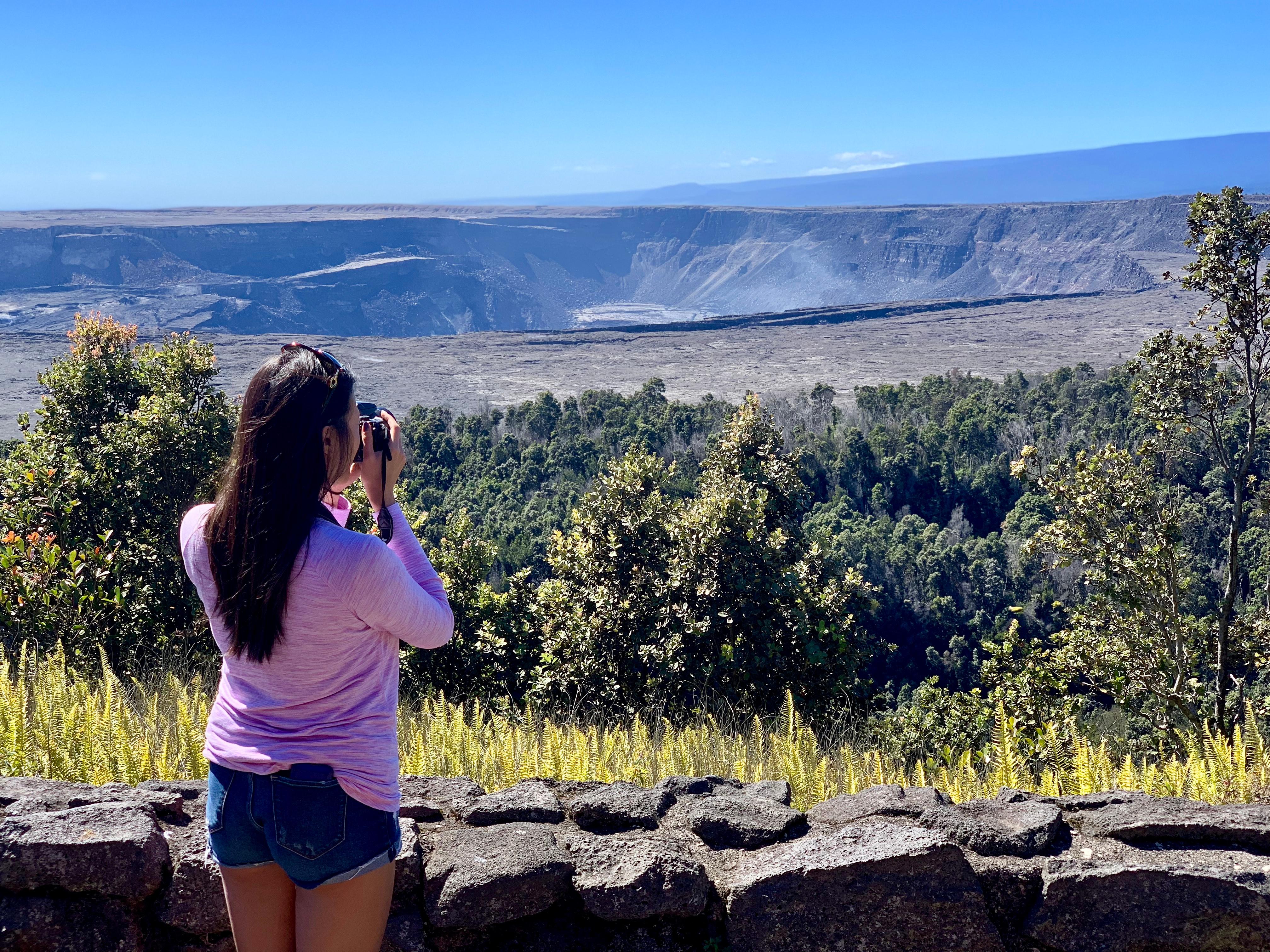
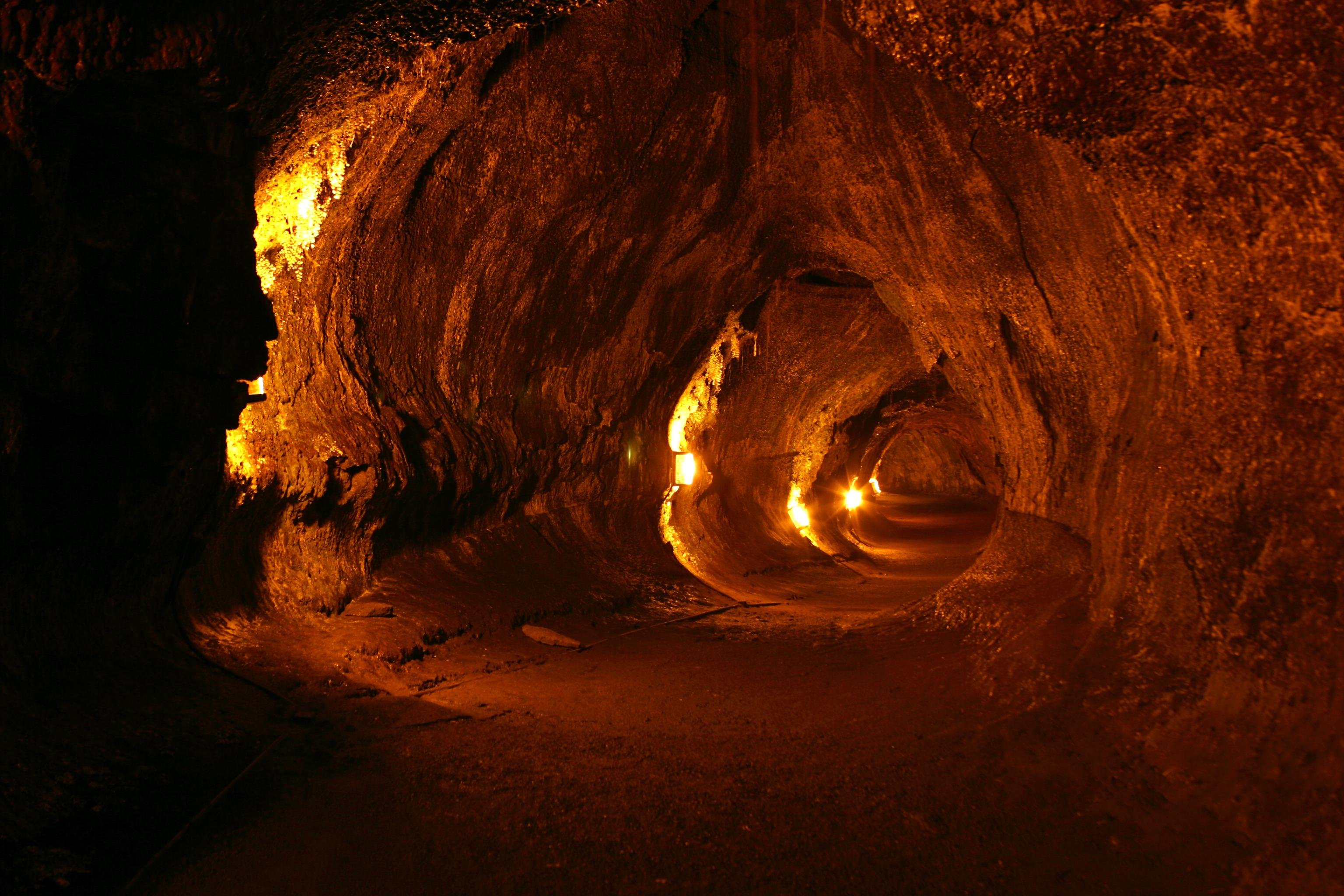
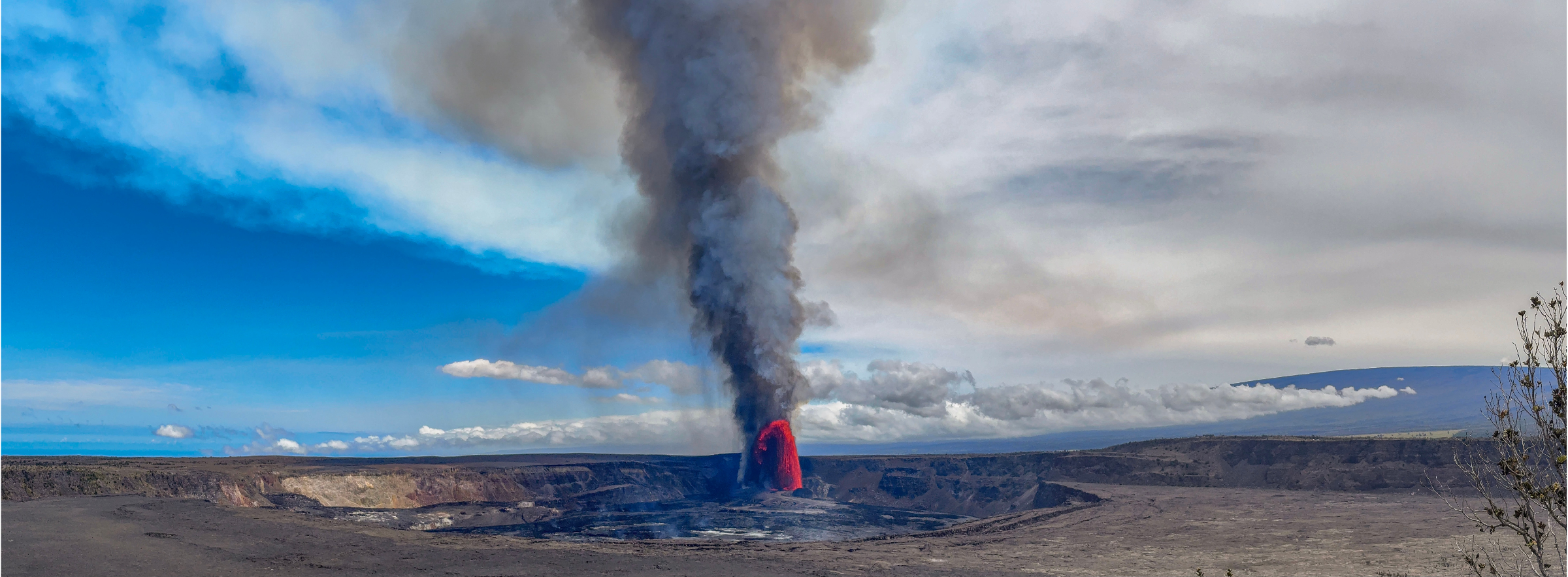
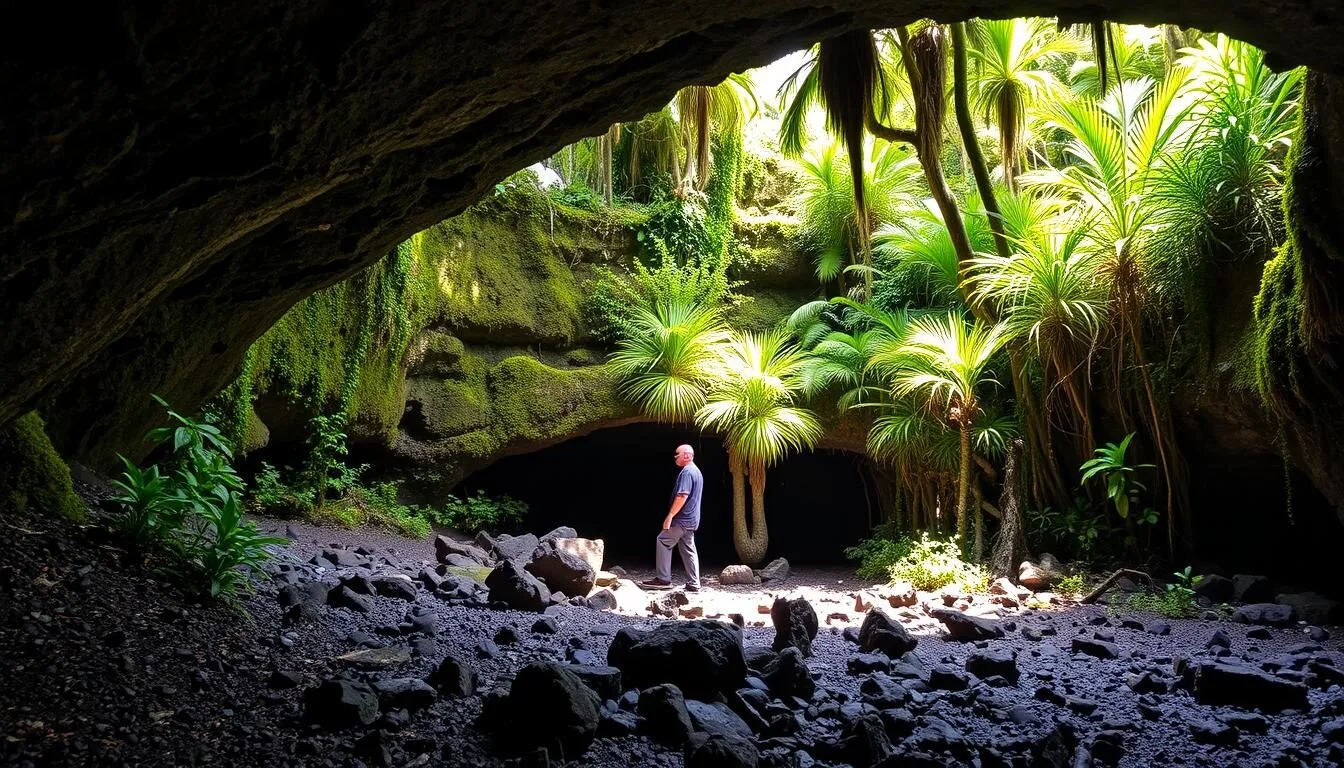
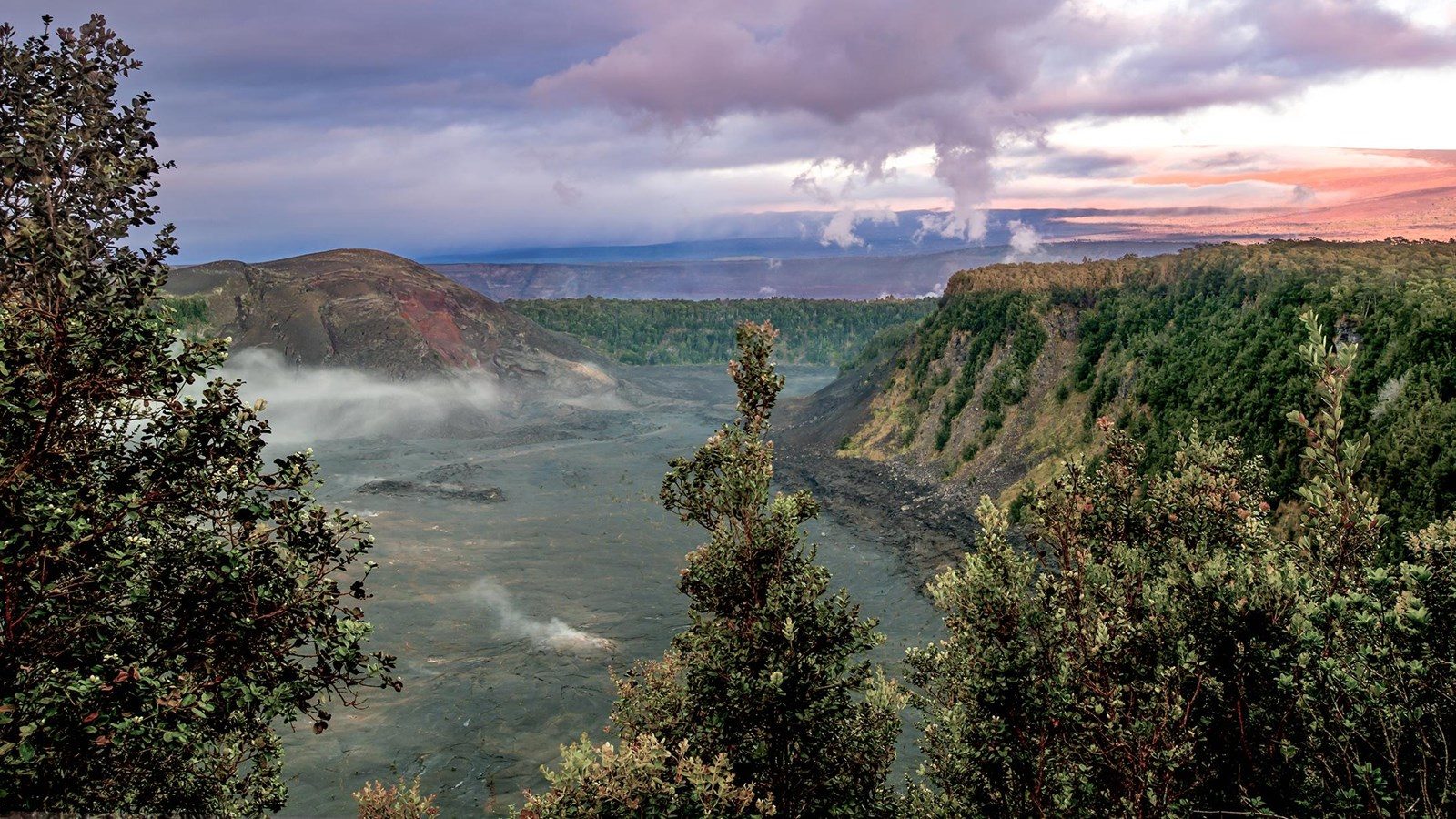
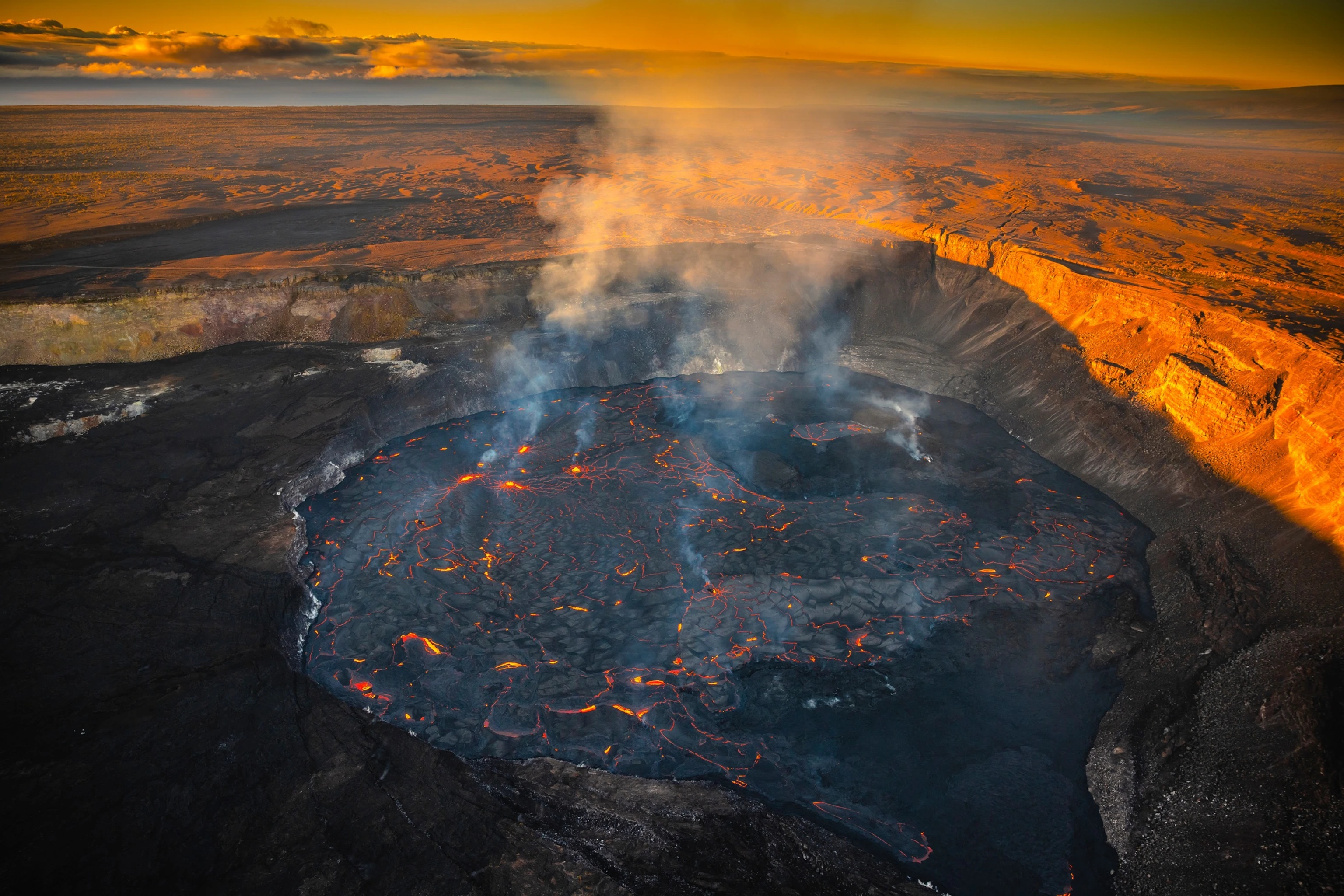
Your guide stops at the Kilauea Overlook, where Halema'uma'u Crater yawns 1,600 feet below. The crater floor is a patchwork of hardened lava lakes, cracked and silver-gray, with active vents releasing sulfur dioxide in continuous plumes. You walk a short section of the Crater Rim Trail, feeling heat radiate through boot soles on sections where the ground is thin above magma chambers. At the Thurston Lava Tube, you descend into a dim tunnel where roots dangle from the ceiling and the air smells of wet stone and moss.
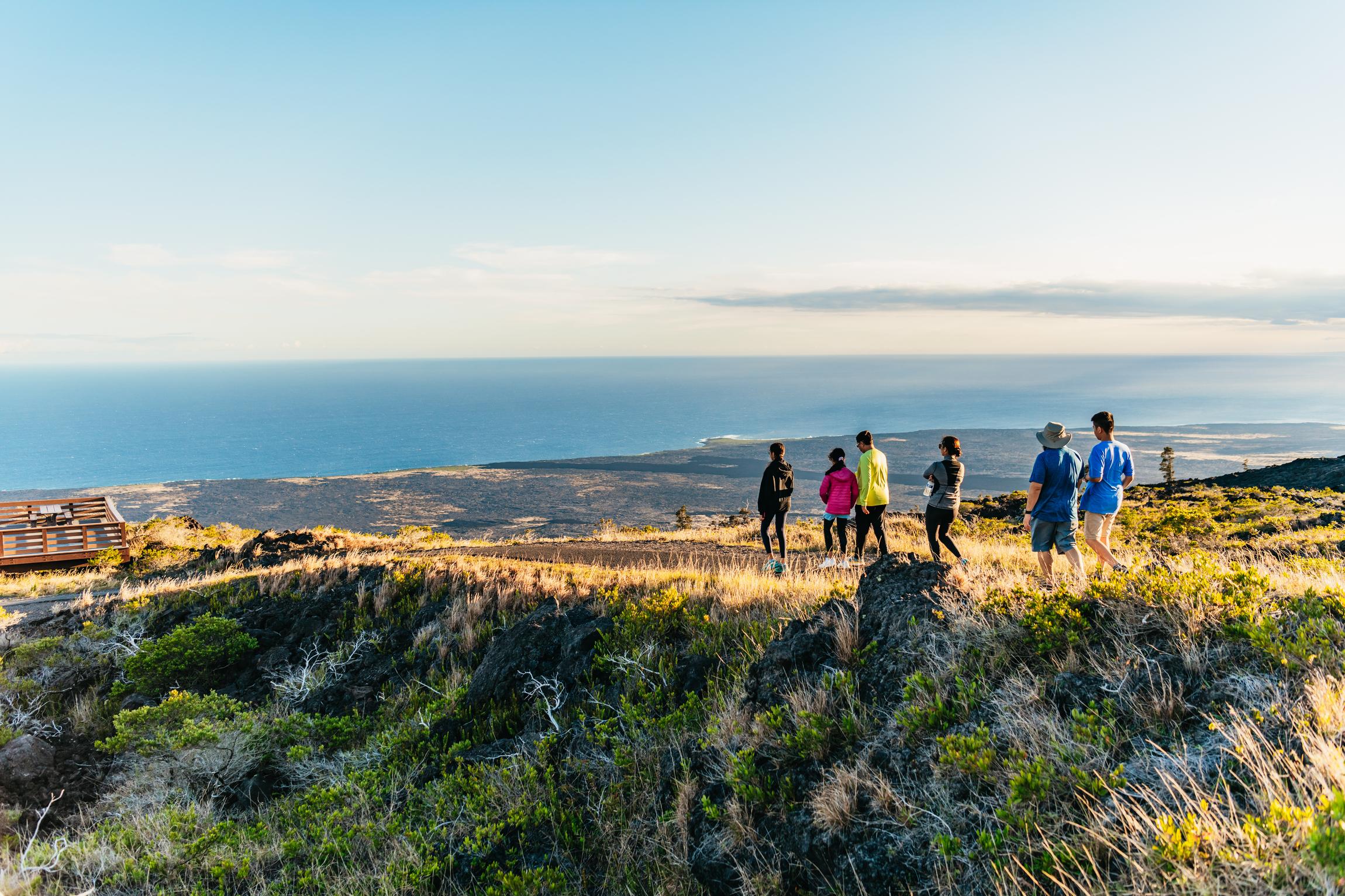
Chain of Craters Road drops through climate zones — from fern forest to scrubland to barren pahoehoe fields. Your guide points out petroglyphs carved into smooth lava, and shows where the 2003 flow stopped just short of burying a coastal archaeological site. On clear evenings, tours return to the summit after dark, when the crater's glow reflects off rising steam and turns the sky faint orange.
All the details about your upcoming adventure in one place
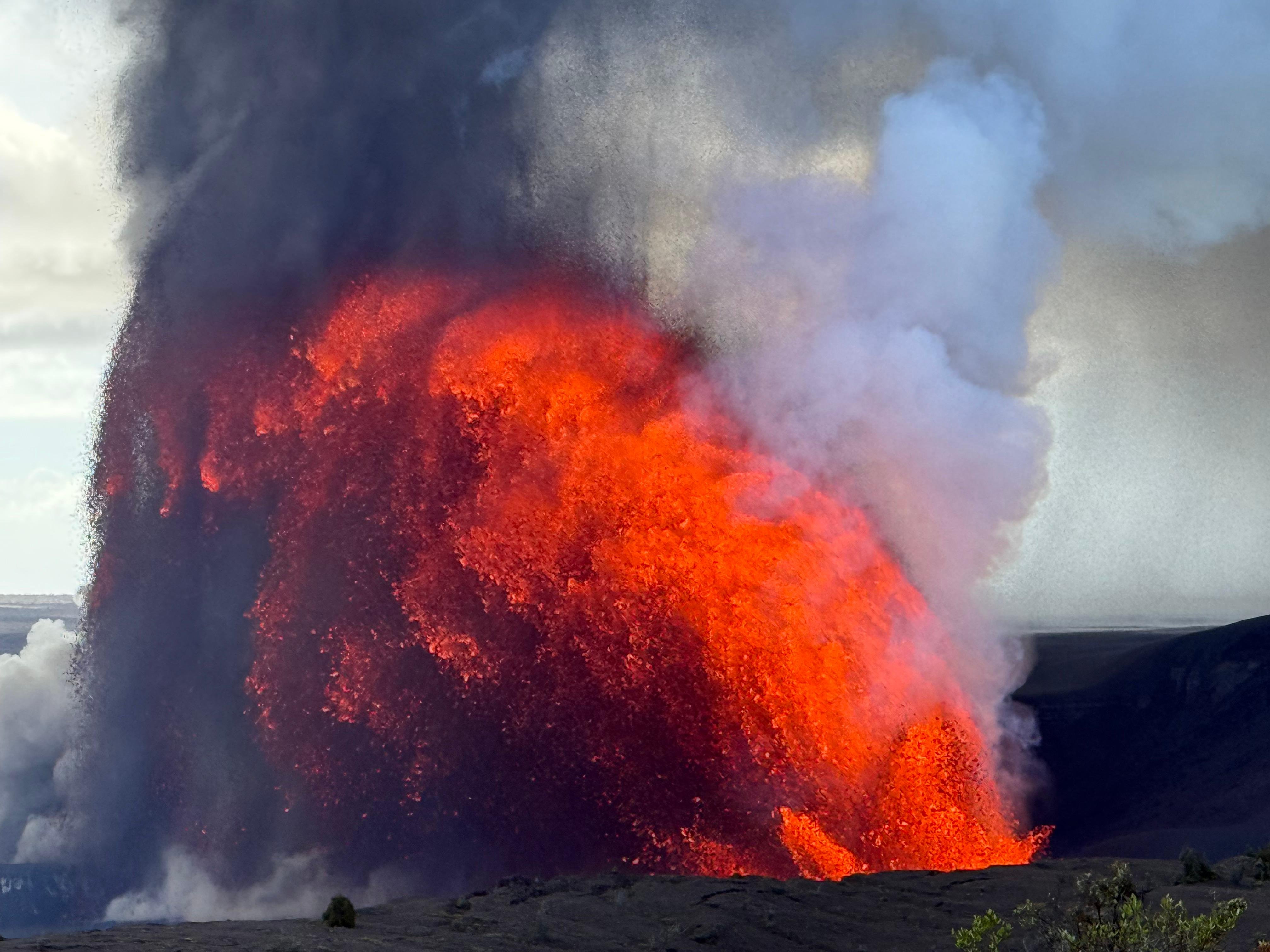
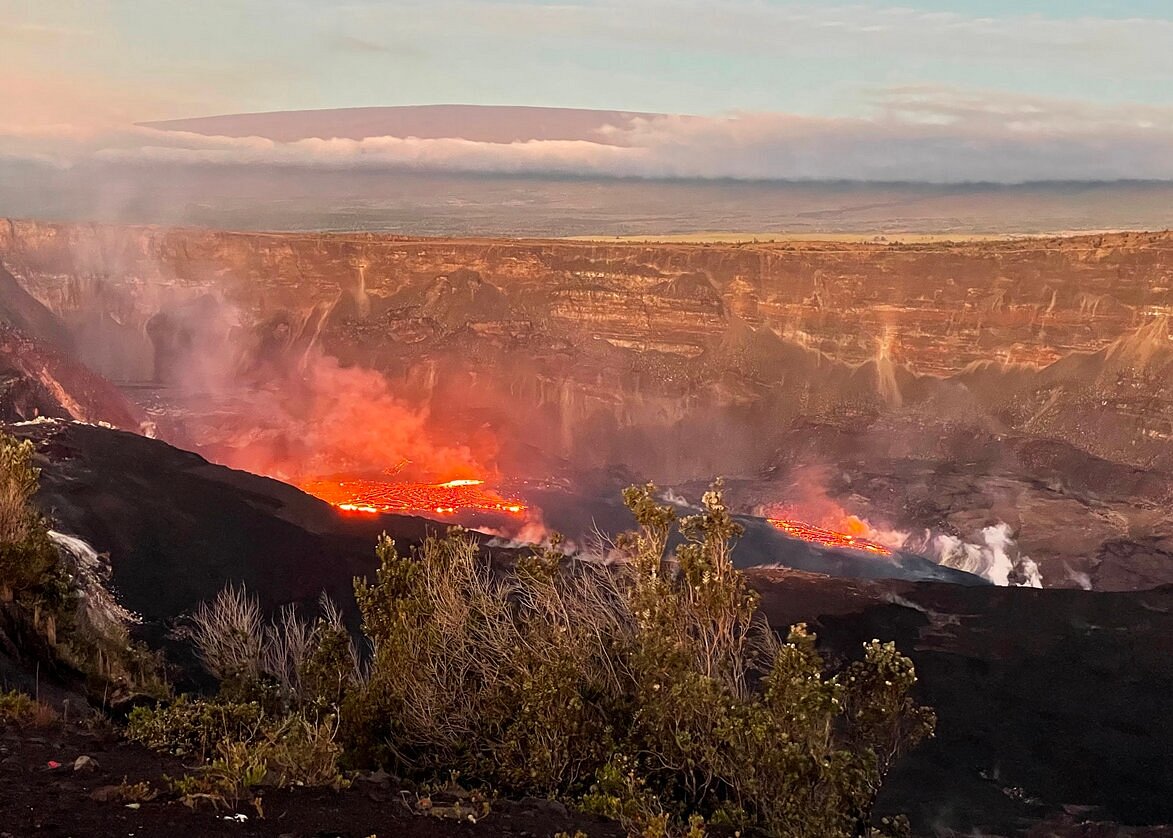
Kilauea has been erupting almost continuously since 1983, making it one of the world's most consistently active volcanoes and a living laboratory for understanding plate tectonics. The summit caldera, home to Halema'uma'u Crater, last collapsed in 2018, draining its lava lake and reshaping the landscape overnight.
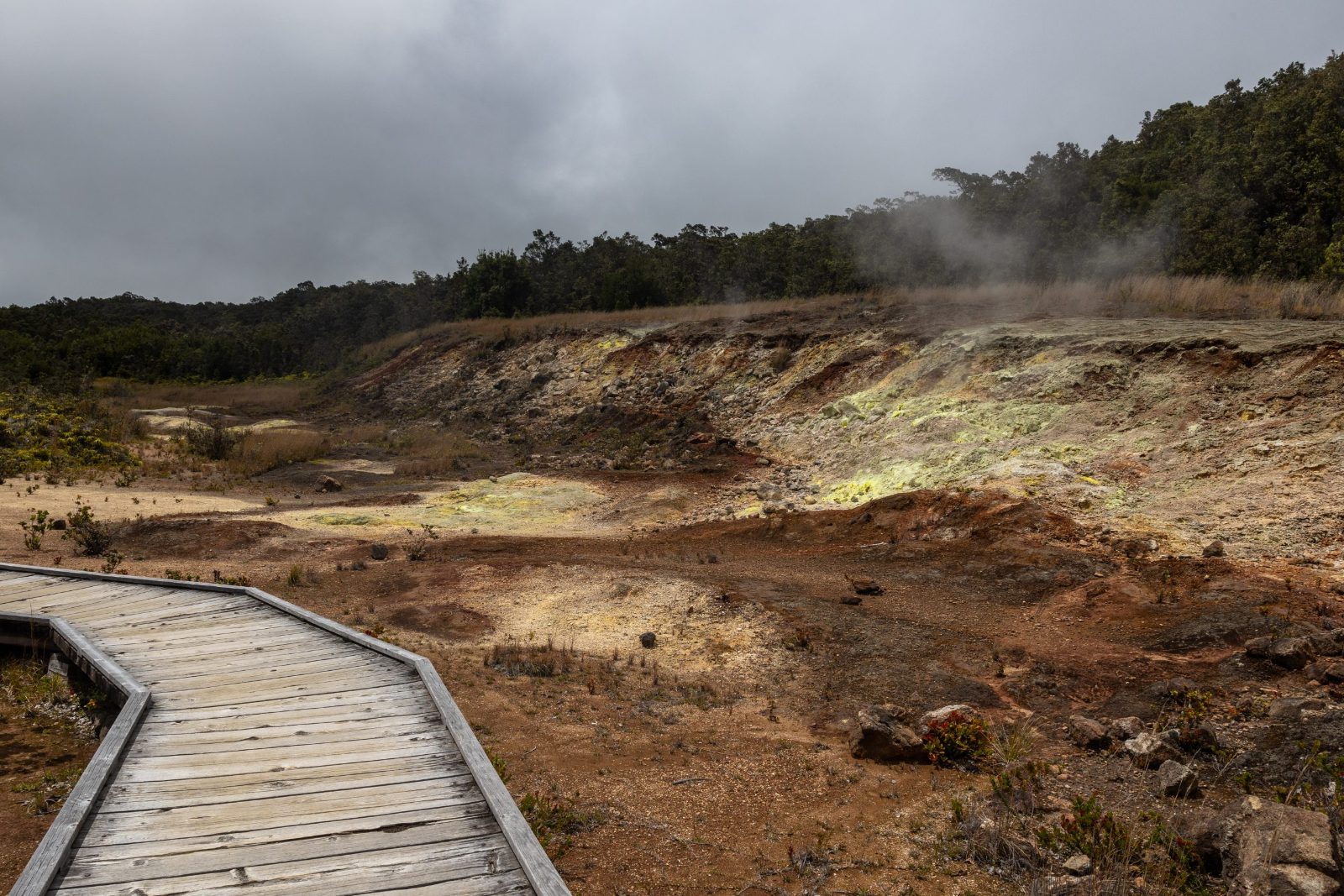
What visitors see today is a geologic theater in constant revision, where steam vents hiss along Crater Rim Drive and sulfur deposits paint the ground yellow and white.
Hawaii Volcanoes National Park occupies 335,259 acres on the southeastern flank of Mauna Loa, encompassing ecosystems that range from sea level to 13,681 feet. Kilauea itself sits at 4,091 feet, straddling the boundary between tropical rainforest and alpine desert. The park was designated a UNESCO World Heritage Site in 1987 for its outstanding natural phenomena and its role in Hawaiian cosmology — Pele, the volcano goddess, is believed to reside within Halema'uma'u. Chain of Craters Road descends 3,700 feet over 19 miles, ending abruptly where lava flows buried the pavement in 2003.
The 2018 eruption and summit collapse forced the park to close for 134 days, the longest shutdown in its history. When it reopened, visitors found a transformed summit — the Jaggar Museum destroyed, overlooks shifted, and Halema'uma'u Crater now five times its previous volume. Despite the changes, the park recorded 1.3 million visits in 2023, drawn by the chance to witness planetary creation in progress. Kilauea tours from Kona typically depart before dawn, covering the 95-mile Saddle Road route that bisects the island between Mauna Kea and Mauna Loa.
The Thurston Lava Tube, a 500-year-old conduit carved by molten rock, remains intact and accessible via a short loop trail through tree ferns and ohia forest. Night visits reveal a different park entirely — the glow from Halema'uma'u reflects off volcanic gases, and the Milky Way arcs over cinder cones undimmed by light pollution. Rangers lead after-dark programs explaining how native plants like the silversword adapted to colonize fresh lava, and how geologists monitor seismic swarms that precede new eruptions.
What visitors see today is a geologic theater in constant revision, where steam vents hiss along Crater Rim Drive and sulfur deposits paint the ground yellow and white.
Wear sturdy closed-toe shoes suitable for walking on uneven volcanic rock. Dress in layers, as temperatures change significantly between the coast and the summit.
Standard daypacks are permitted on Kilauea tours from Kona. All bags may be subject to inspection by National Park Service staff.
Photography is allowed throughout Hawaii Volcanoes National Park. Respect all safety barriers and do not cross fences to capture images during your Kilauea tours from Kona.
The park is suitable for all ages, though supervision is required near craters and cliff edges. Family-oriented Kilauea tours from Kona often include educational stops at the visitor center.
Key areas including the Kilauea Visitor Center and various scenic overlooks offer accessible paved paths. Check with your guide for specific Kilauea tours from Kona transport capabilities.
Carry adequate water and snacks, as services inside the park are limited. Leave no trace of food waste during your Kilauea tours from Kona visit.
Opening hours
00:00–23:59
Address
1 Crater Rim Drive, Hawaii National Park, HI 96718
Accessibility
Most overlooks are wheelchair accessible
Best arrival
06:00–09:00
Entrance fee
30 USD per private vehicle
Car · 2.5 hours · Fees apply
Follow Highway 11 to the park entrance; ample parking is available at the Visitor Center.
Tour Operator · Variable · Included in tour price
Private shuttles depart daily for Kilauea tours from Kona.
Full refunds are provided for cancellations made at least 24 hours before your scheduled tour departure. This policy applies to all Kilauea tours from Kona bookings.
Recommended time
6-8 hours
Planning your trip requires accounting for the significant transit distance, as kilauea tours from kona typically span a full day of exploration across the caldera. Expect to navigate shifting visitor volumes at primary landmarks throughout the afternoon, though kilauea tours from kona tours often utilize flexible routes to avoid congestion. Those booking kilauea tours from kona tickets will find that dedicated transit time allows for a comprehensive experience, provided they remain aware of pedestrian flow at key lookout points. By choosing curated kilauea tours from kona tour packages, guests can optimize their time despite the high volume of visitors moving through the volcanic landscape.
Crowd levels through the day
Weather · crowds · average price — dots go green to amber to red as each metric rises.
Mild temperatures make this a great time for Kilauea tours from Kona walking paths.
Expect higher humidity and warmer weather, requiring extra hydration throughout the day.
Cooler evenings provide excellent conditions for night-time volcanic glow viewing.
Occasional rain showers occur, but crowds are generally lighter for sightseeing.
Always remain on designated paths for your safety and to protect the fragile ecosystem.
Review the official site before leaving for Kilauea tours from Kona to check current closures.
Follow the 06:00–09:00 window to ensure better parking and lower temperatures.
View the lava landscapes as sacred sites and maintain quiet behavior.
The high elevation means temperatures drop quickly when the sun sets.
1 Crater Rim Drive, Hawaii National Park, HI 96718
Primary meeting point for guided excursions
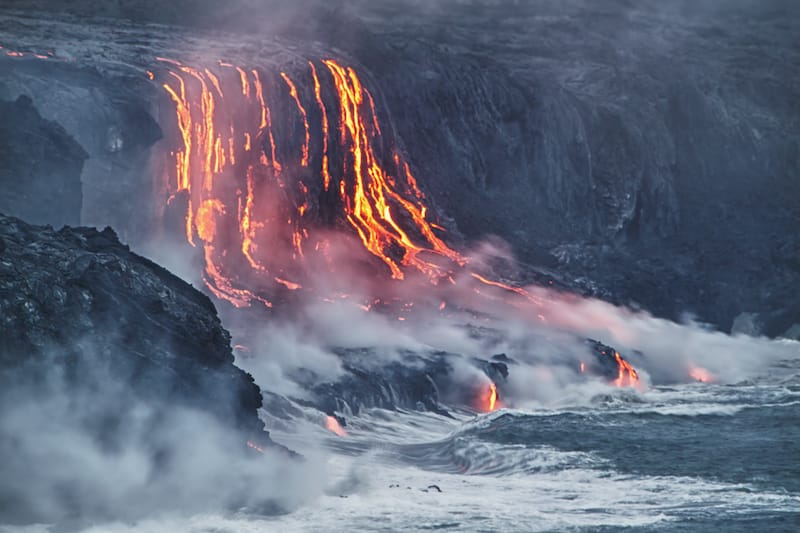
Get directionsKilauea's transformation from sacred ground to accessible destination began long before kilauea tours from kona became a fixture of Hawaii's tourism industry. Native Hawaiians revered the volcano as the home of Pele, the fire goddess, and documented eruptions stretching back centuries through oral tradition. Western documentation began in 1823 when missionary William Ellis led the first recorded expedition to the summit caldera, describing a boiling lava lake that would captivate scientists and travelers for generations. The establishment of Hawaiian Volcano Observatory in 1912 marked a pivot from spiritual pilgrimage to scientific inquiry, with Thomas Jaggar anchoring permanent monitoring on Kilauea's rim. The creation of Hawaii National Park in 1916—later split into Hawaii Volcanoes National Park in 1961—cemented federal protection and infrastructure investment. Chain of Craters Road opened incrementally through the 1960s, offering vehicle access to coastal eruption zones that had been reachable only by foot. The 1983 Pu'u 'Ō'ō eruption initiated a 35-year eruptive phase that reshaped both the landscape and the visitor economy; lava flows consumed entire subdivisions, severed Highway 130, and created new black-sand coastline. Kilauea tours from kona tours expanded dramatically as helicopter operators and van services capitalized on the spectacle of molten rock meeting the Pacific. The 2018 collapse of Halema'uma'u Crater and the draining of its lava lake forced a years-long closure and rewrote the park's geography. The summit crater doubled in volume, swallowing overlooks and trails. Reopening in 2020 revealed a vastly altered caldera, its floor 1,500 feet deeper than before. A new lava lake appeared in 2020 and has intermittently refilled since, drawing renewed attention to kilauea tours from kona tickets as visitor numbers rebound. The park now balances access with the reality that Kilauea remains one of the world's most active volcanoes, capable of reshaping itself—and the tour routes—within hours.
Missionary William Ellis leads the first recorded Western expedition to Kilauea's summit caldera.
Hawaiian Volcano Observatory is established by Thomas Jaggar, initiating continuous scientific monitoring.
Hawaii National Park is created, encompassing Kilauea and laying the foundation for public access infrastructure.
Chain of Craters Road is completed, opening vehicle routes to coastal eruption zones previously reached only on foot.
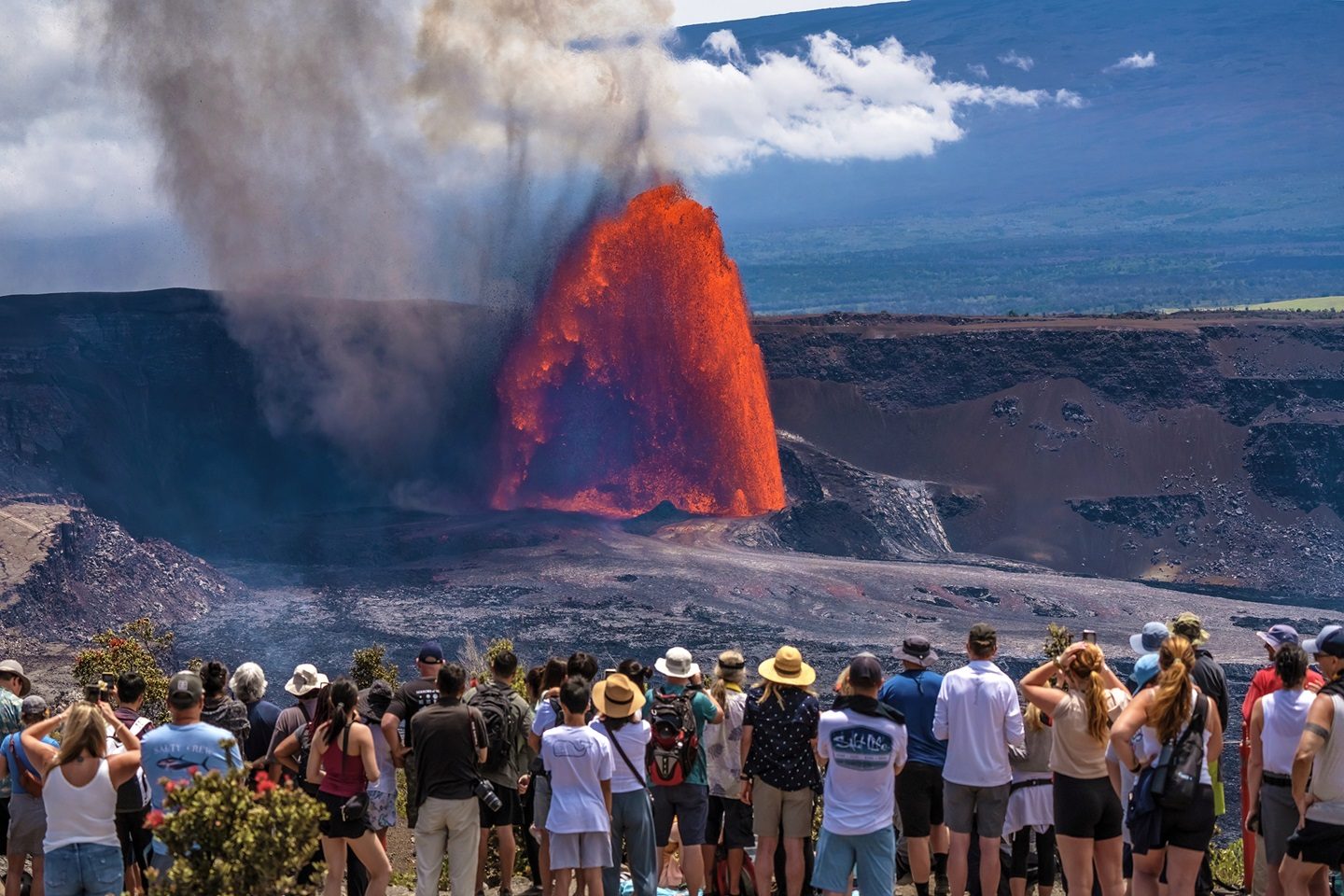
Pu'u 'Ō'ō eruption produces continuous lava flows, burying homes and highways while fueling a surge in volcano tourism.
Summit collapse drains Halema'uma'u lava lake and doubles crater volume, forcing multi-year park closure.
Park reopens with a transformed summit; a new lava lake begins intermittent activity in the deepened Halema'uma'u Crater.
Stand near the trailhead where volcanic steam rises from the ground through cracks in the earth to create atmospheric shots. This spot offers a unique perspective of the caldera landscape with natural vapor clouds.
Steam Vents Hawaii Volcanoes National Park
Kilauea Iki Overlook view
Sulfur Banks trail Hawaii
Keanakako‘i Overlook crater view
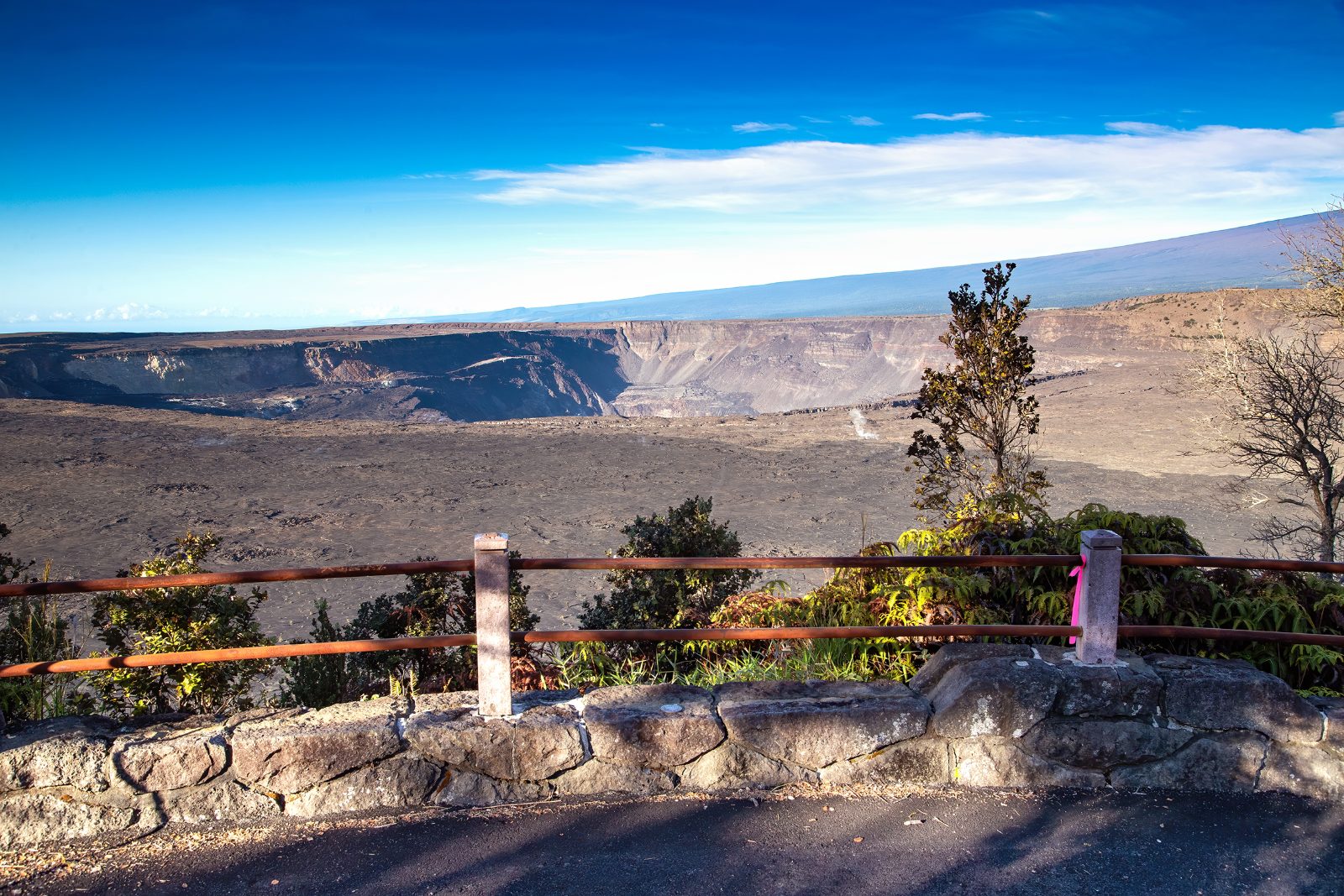
Waldron Ledge panoramic view
Planning kilauea tours from kona requires careful preparation to manage the long travel time and volcanic terrain with children. Understanding these logistics helps families navigate this Hawaii National Park experience comfortably.
Most paved crater trails accommodate sturdy strollers, but expect uneven terrain and gravel paths that may be challenging for small wheels. Consider a carrier for infants or toddlers to reach viewpoints more easily.
Children aged six and older often engage most with the geology and ranger programs, though the drive makes kilauea tours from kona tours suitable for all ages if you plan for frequent stops. Bring comfort items for the van ride to help kids manage the duration of the journey.
Restrooms with baby-change facilities are located at the visitor center and major trailheads like the Thurston Lava Tube. Pack extra water and snacks, as buying supplies inside the park is limited and requires kilauea tours from kona tickets for access.
The drive from the Kona coast is lengthy, so prioritize shorter loops like the Steam Vents to keep younger children active without exhaustion. Always check the kilauea tours from kona tour schedule to allow for adequate rest between volcanic sightseeing stops.
Keep children on marked trails at all times to avoid unstable ground and volcanic gases in this active park environment. Staying on established paths is essential for maintaining safety while exploring these Big Island landmarks.
Visitors participating in kilauea tours from kona have access to limited on-site dining, though additional choices exist in Volcano Village just outside the park gates. Planning ahead is recommended as these caldera-side venues can experience heavy traffic during peak hours.
Located within the historic lodge, this venue offers expansive views of the crater and serves lunch and dinner. It is a reliable spot for sit-down meals after completing your kilauea tours from kona tour.
Situated in the nearby forest, this lodge provides a cozy atmosphere with a menu focused on local ingredients. It is a popular choice for those holding kilauea tours from kona tickets who prefer a more relaxed environment.
This vegetarian-friendly café features a tranquil garden setting in Volcano Village. It serves fresh, seasonal soups and salads, perfect for guests who have booked kilauea tours from kona tours and need a light, quick meal.
Everything you need to know for your journey
The park is open 00:00–23:59 daily, allowing flexibility for Kilauea tours from Kona.
Yes, the entrance fee is 30 USD per private vehicle, valid for 7 consecutive days.
For the best experience during your Kilauea tours from Kona, arrive between 06:00–09:00.
Photography is permitted in the park, but always stay on marked trails during your Kilauea tours from Kona.
Facilities are limited, so bring your own food and water for your Kilauea tours from Kona trip.
Most visitors drive from Kona via Highway 11 to reach the park for Kilauea tours from Kona.
Yes, Kilauea tours from Kona are generally family-friendly, though constant supervision is necessary.
Yes, check your specific operator policy; usually, you can cancel your Kilauea tours from Kona tickets 24 hours in advance.
Bring essentials like water, sun protection, and a rain jacket for your Kilauea tours from Kona day out.
A massive tunnel formed by flowing lava centuries ago.
Natural vents where groundwater hits hot volcanic rock.
A popular hiking path crossing a solidified lava lake.
Offers a panoramic perspective of the caldera region.
Historic hotel located on the rim of Kilauea caldera.
Charming lodge surrounded by lush native forest.
Various options available in nearby Volcano Village.
Join thousands of happy travelers who have discovered this incredible experience
Book Your Experience Now