

Quick answer
Kilauea erupts almost continuously, with summit and rift zone activity occurring in cycles that range from weeks to decades. The volcano has been erupting nearly non-stop since 1983, though the style and location of eruptions shift between effusive lava flows and summit crater activity. Between major eruptive phases, Kilauea may pause for months or years, but these quiet periods are brief compared to its active centuries.
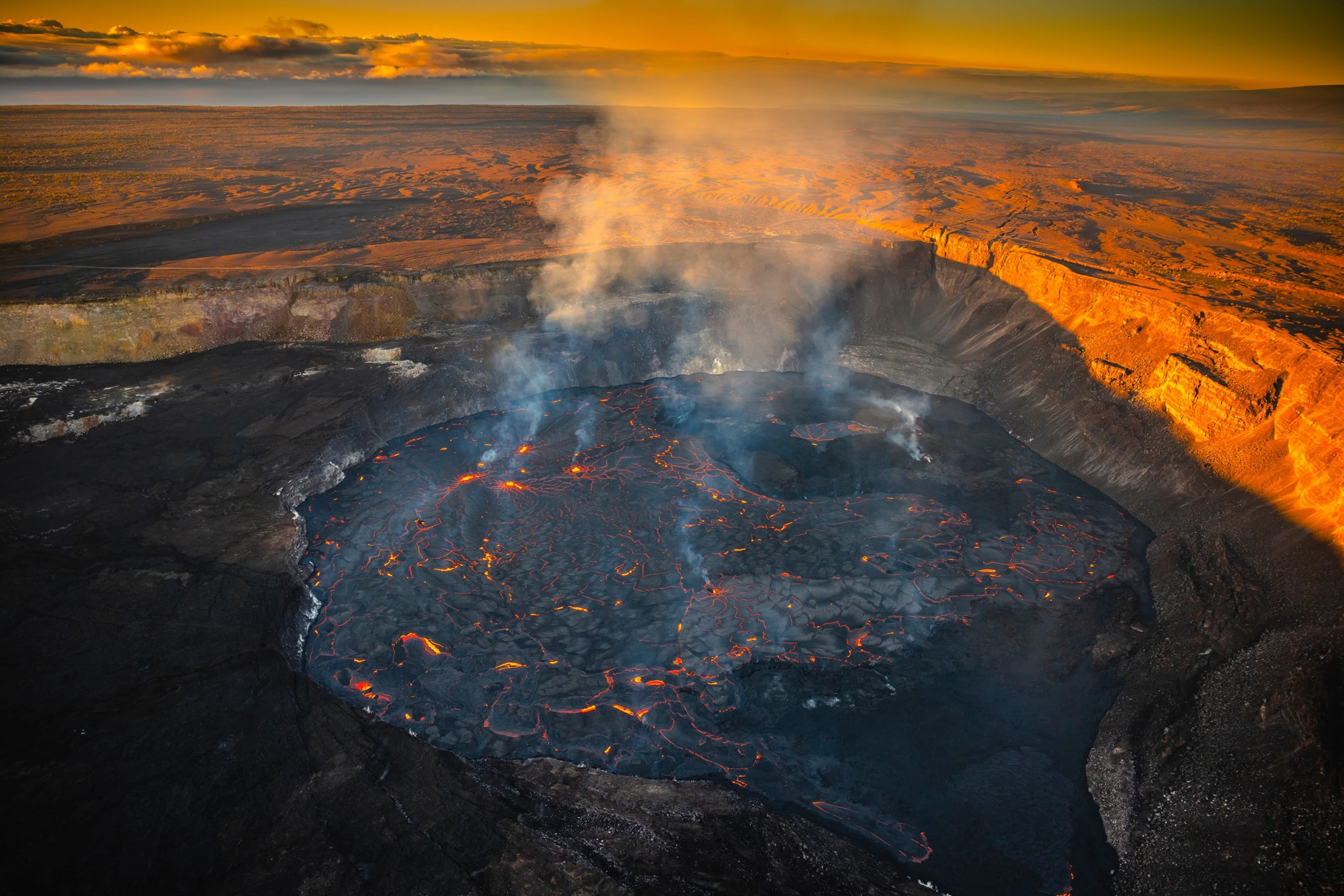
Kilauea has erupted 34 times since 1952, making it one of the most active volcanoes on the planet. The question of how often Kilauea erupts depends less on counting discrete events and more on understanding that this shield volcano operates in a state of persistent unrest. Its magma supply system constantly replenishes, feeding eruptions that can last days or decades. The Pu'u 'Ō'ō eruption, which began in January 1983 and continued until May 2018, redefined what volcanic frequency means. For 35 years, lava flowed nearly without pause, reshaping the island's southeastern coast and adding over 500 acres of new land. This wasn't 35 separate eruptions but a single protracted event with shifting vents and phases. When Pu'u 'Ō'ō ended, the volcano's summit collapsed, draining Halema'uma'u Crater and triggering explosive activity not seen since 1924. By December 2020, lava returned to the summit, filling the crater floor with a lake that periodically drains and refills as magma pressure fluctuates. Historical records show Kilauea's eruptive rhythm follows no strict calendar. Between 1790 and 1982, the volcano erupted roughly once every two years on average, but those intervals ranged from months to nearly two decades. The summit crater hosted a lava lake almost continuously from 1823 to 1924, then remained quiet for 28 years before resuming activity in 1952. Since then, repose periods have shortened dramatically. The longest modern pause lasted just five years, from 1934 to 1952. What visitors witness today reflects this legacy of near-constant activity. The summit's Halema'uma'u Crater may glow with molten lava, steam vents may hiss along the caldera rim, and seismic tremors may register on monitoring stations throughout the park. Even when no visible lava appears, the volcano remains geologically restless, its magma chambers pressurizing for the next phase. Eruption frequency at Kilauea is less a matter of isolated events and more a persistent geological conversation between the Pacific Plate and the Hawaiian hotspot 60 kilometers below.
“For 35 years, lava flowed nearly without pause, reshaping the island's southeastern coast and adding over 500 acres of new land.”
How Often Does Kilauea Erupt and Why Is It So Active?
Kilauea is one of the most active volcanoes on Earth, characterized by semi-continuous eruptive phases rather than a predictable calendar. Its activity is driven by a steady supply of magma from the Hawaiian hotspot, resulting in long-term volcanic unrest.
Geologists estimate Kilauea emerged above sea level between 210,000 and 280,000 years ago, though it has been active for much longer.
1983 to 2018 eruptive phase
The Puʻu ʻŌʻō eruption lasted for 35 years, making it the longest-lived rift zone eruption of the volcano in over five centuries.
Shield volcano classification
Kilauea is a shield volcano, formed by the accumulation of fluid basaltic lava flows that create its broad, gently sloping profile.
Hawaiian hotspot source
The volcano remains active due to its position over the Hawaiian hotspot, a plume of intense heat in the Earth's mantle that melts the Pacific Plate.
Summit and rift zone eruptions
Activity typically alternates between summit eruptions within Halemaʻumaʻu crater and flank eruptions along the East Rift Zone.
Lack of predictable intervals
What Is the Best Time to See How Often Does Kilauea Erupt?
The best arrival window is 00:00–05:00, which minimizes crowds and maximizes visibility of the volcanic glow. Monitoring current conditions via the official site is necessary, as eruptive activity remains dynamic and unpredictable.
Weekday mornings
Minimal—
Arriving during the early hours provides the best opportunity to observe the glow before daylight. Visiting mid-week further reduces visitor density.
April and May
ModeratePleasant, 65°F to 75°F
These months offer stable conditions and avoid the peak summer travel surges. The climate is generally mild for nighttime viewing.
October and November
ModerateCooler, 60°F to 70°F
Lower humidity and moderate temperatures make for comfortable observation periods. This shoulder season typically sees fewer visitors than winter months.
Verdict: The best time to visit is during the 00:00–05:00 arrival window in April or October to balance volcanic glow visibility with manageable crowd levels.
Observing the Results of How Often Does Kilauea Erupt
Visitors can observe the landscape shaped by Kilauea's frequent volcanic activity from designated viewpoints within Hawaii Volcanoes National Park. These locations provide safe access to observe geological changes resulting from past and ongoing eruptions.
Halemaʻumaʻu Crater Rim
This central feature offers primary views of the summit caldera where recent eruptive activity has frequently occurred. Observe shifts in the crater floor and steam vents from the perimeter.
Walk the paved Crater Rim Trail for varied vantage points.
Sulphur Banks
This area showcases volcanic gases escaping from the ground, resulting in mineral deposits and colorful rock formations. The trail passes through a forested area before opening to the thermal zone.
Look for crystalline sulfur deposits along the wooden boardwalk.
Kīlauea Iki Overlook
This viewpoint sits above a solidified lava lake from the 1959 eruption, demonstrating the long-term impact of volcanic cycles. The trail descends through a native rainforest onto the crater floor.
Bring binoculars to identify pressure ridges on the crater floor.
Steam Vents
Groundwater seeps into hot volcanic rocks, rising as steam plumes that can be seen across the park landscape. These vents highlight the heat that remains beneath the surface.
Visit during cooler morning hours for higher steam visibility.
Devastation Trail
This paved path traverses an area buried by cinders from the 1959 eruption, showing how vegetation slowly returns to volcanic landscapes. It offers a clear view of the Puʻu Puaʻi cinder cone.
Walk the full loop to see emerging native ohiʻa lehua.
Park Operating Schedule to Check How Often Does Kilauea Erupt
Hawaii Volcanoes National Park remains accessible to visitors 24 hours a day, every day of the year. This schedule allows for continuous observation of volcanic activity regardless of the time.
| Monday | 00:00–23:59 | |
|---|---|---|
| Tuesday | 00:00–23:59 | |
| Wednesday | 00:00–23:59 | |
| Thursday | 00:00–23:59 | |
| Friday | 00:00–23:59 | |
| Saturday | 00:00–23:59 | |
| Sunday | 00:00–23:59 |
Navigating to the Park to See How Often Does Kilauea Erupt
Hawaii Volcanoes National Park is located on the island of Hawaii. The primary access point for visitors is via Hawaii Belt Road, also known as Highway 11.
Highway 11 to Crater Rim Drive
Hele-On Bus to Hawaii Volcanoes National Park
Park trails from Crater Rim Drive
Check availability
Frequently Asked Questions About Kilauea Volcanic Activity
Everything you need to know about how often does kilauea erupt